

Coming to Canada taught me that home is not a building nor is it one single place. But rather, it is created when independence changes to interdependence, interdependence forms community, and the community eventually becomes home. I also learned that sometimes, the deep and meaningful relationships we are looking for may require us to first open our hearts and minds to people.
Having lived in Japan all my life, and being a first-born child, I had always felt like growing up or maturity is being able to stand and figure things out on my own without depending on people like my family and friends. In other words, I believed maturity meant independence and self-sufficiency. So, from my early teenage years, when I wanted or needed something, I would do my very best to think of ways to sort out the situation on my own, before even considering asking for help. This way, no one was bothered or inconvenient, and I felt satisfied and proud of myself for figuring it out on my own. It seemed like a perfect strategy and a win-win situation. This worked most of the time, but when it did not work in some situations and I had no choice but to receive help, I would feel very bad about myself and guilty of having to “disturb” the person who was helping me, even though they did not think of it that way.
An example of this was when I used to get bullied in elementary and junior high school. Even though I was born, raised, and schooled in Japan, because my appearance and personality were very different from everyone, I was considered an outsider by the very people (Japanese people) I felt I belonged with an was a part of. People in school would stare at me and ask me uncomfortable questions like “Why is your nose and eyes so big?” They would also avoid staying close to me thinking they would get “stained” by my brown skin. They disliked me and talked about me like a disease or something to avoid. This experience made me to have very low self-esteem, lose confidence in my Nigerian roots, and very self-caution. There were times I wished I looked more Japanese to them so I would stop being seen as an outsider who did not belong. I wanted acceptance, I wanted real friendship, not one that exists because of what I can offer such as giving tips during English classes, (which according to some of my school mates, was the only subject I was good at). I wanted to feel seen, understood, loved, and like I belonged. But that never happened, and I spent most of my time in school alone without people I sincerely considered friends. While going through this, I avoided telling my parents details of things that were going on and how I felt because I did not want them to worry about me or cause any trouble. Even though things changed for the better in my highschool years, where I felt more like I belonged, I unknowingly carried this mindset of “figuring things out on my own” without “bothering or inconveniencing people” with me to study abroad here in Canada.
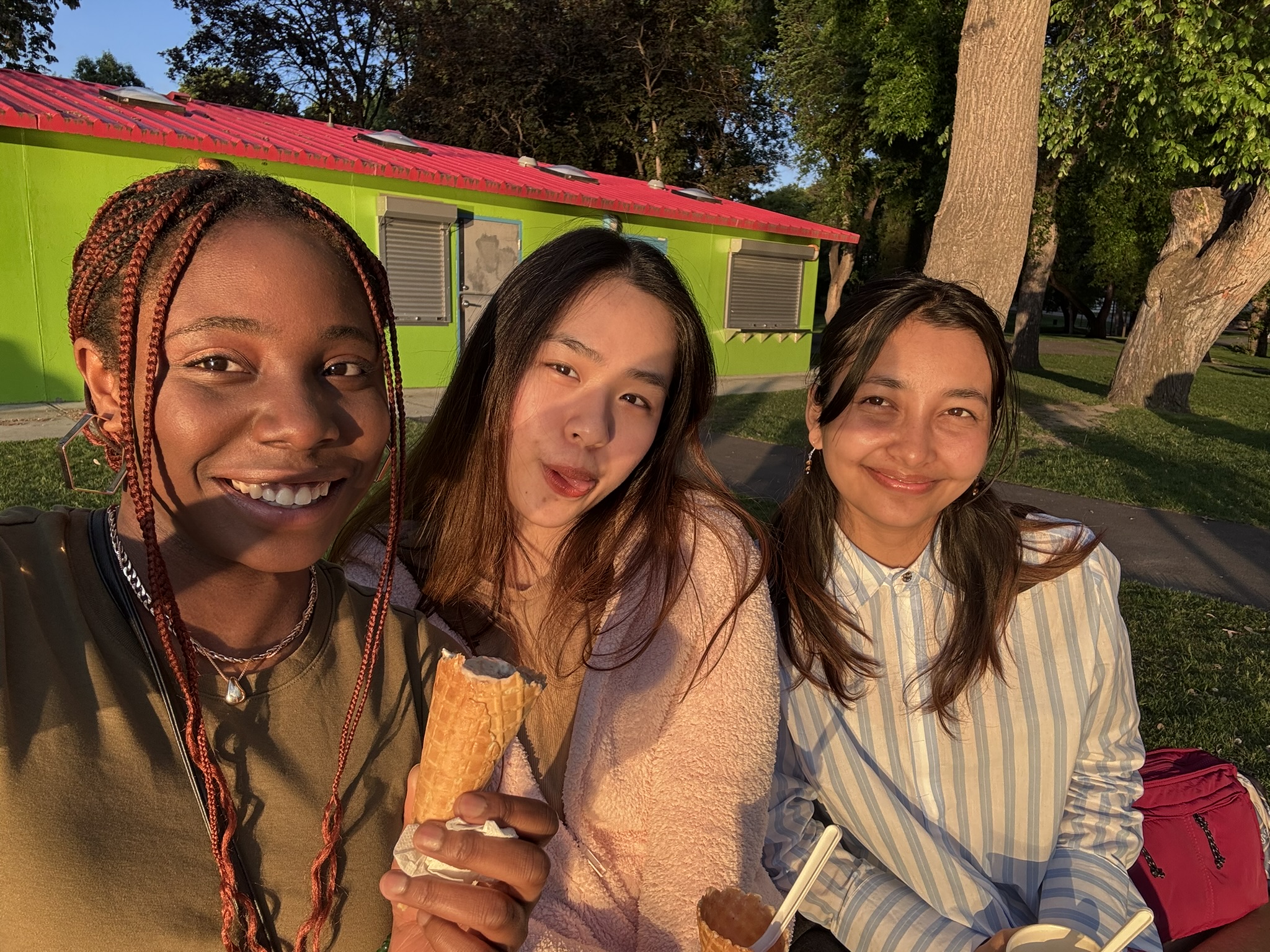
When I came to Canada and began living on my own and taking care of myself, I felt like I was finally mature and independent because I did not have to depend on my parents for many things. I was very happy being on my own in the beginning, however, over time, that happy feeling turned into loneliness. I mistook that feeling, for being home sick and wanting to be with family and friends I knew, but no matter how much I called and spoke to them, the feeling never seemed to disappear. I had gotten so used to not bothering others and being on my own, that I unknowingly avoided new friendships, opportunities to create new connections and even opening my mind/heart to new people who tried to come closer, to build relationships and bonds. I realized that I feared disappointments, rejection, and not being accepted, which caused me to hide myself in my comfort zone. I thought leaving Japan was me leaving my comfort zone however, I realized during this time that my comfort zone was not necessarily a place, but rather a mindset that I needed to change in order to heal from my “loneliness”. During phone conversations with my mom, she would say things like, “You need to create your own community there in Kamloops. Don’t only look for ways to connect with family and people you know. Create something new for yourself”. I did not really understand what my mom meant in the beginning, but I began staying longer after church service to talk to people, engaging in activities and going to events which made me to get to know more people, and build relationships. Over time, I was able to ask for help when I needed and be there for people who needed me. To be honest, I believe I am still in the process of completely healing from my past and working to build the deep and meaningful relationship I have always longed for, but I hope I am able to achieve that one day.
As someone with a multi-cultural background I do not consider my home as this one place, but rather, I like to consider myself as a person with many homes around the world. I intend to continue creating more “home” all over the world and one day even for my future multi-cultural children. I believe my experience and the lessons I have learned from it will help me to venture into new parts of the world, seek out greater opportunities without fear, and build deep and meaningful relationships with people everywhere I go. My dream is that my experience will enable me to help and support my future children and other young people with similar experiences like mine, navigate through difficult situations, and have many “homes”.